
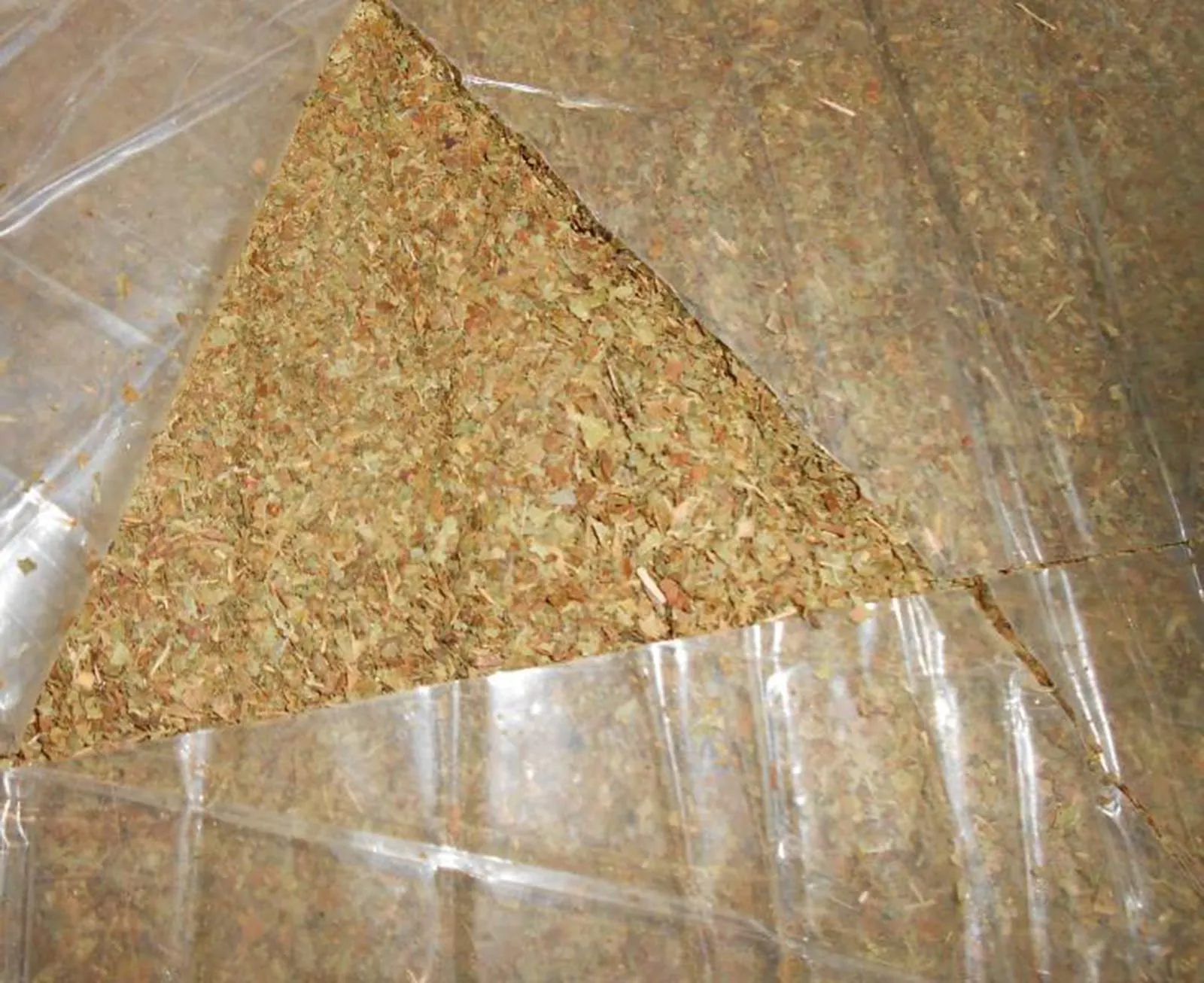

Kratom is not a controlled substance under United States federal law. It has never been scheduled under the Controlled Substances Act, and possessing it is not a federal offence.
It is also not lawfully marketable as a food, a dietary supplement or a drug, and the Food and Drug Administration detains it at the border. Both of these things are true simultaneously. The resulting product, legal to hold but unlawful to sell as anything you would actually want to sell it as, is why the American kratom market looks the way it does.
Not scheduled
We checked 21 CFR § 1308.11, the codified text of Schedule I, in the version the eCFR served on 25 August 2026, which was the most recent issue available. Neither mitragynine, nor 7-hydroxymitragynine, nor Mitragyna speciosa, nor kratom appears anywhere in it. They appear in no other schedule either. Cocaine, heroin and cannabis do appear, so we were reading the list rather than an empty page, and so do mephedrone, bromazolam, etazene and O-desmethyltramadol, the last of which was scheduled on 12 August 2026, so the text we read was current to within two weeks.
Three kratom-derived substances are now in Schedule I, and they are the first ever to be. They are dealt with below. None of them is kratom, mitragynine or 7-hydroxymitragynine.
The DEA has designated mitragynine and 7-hydroxymitragynine as Drugs and Chemicals of Concern, an administrative watch-list label that carries no criminal penalty and imposes no control whatsoever.
The agency did attempt to place kratom’s alkaloids into Schedule I in 2016, using its emergency scheduling power. It withdrew the notice after unusually forceful public and congressional pushback. Nothing has been scheduled since.
There is a neat piece of internal evidence for 7-OH’s unscheduled status in the DEA’s own current paperwork. On 6 July 2026 the agency published a notice of intent to temporarily schedule 7-OH above a concentration threshold, and on 14 October 2026 it proposed a replacement and announced that the July notice is being withdrawn, an action that would be redundant if 7-OH were already controlled. The new notice is still a proposal, so it remains proof of the present position.
But not sellable either
Federal drug law leaves kratom alone. Federal food and drug law does not.
- As a drug: there are no FDA-approved kratom drug products. Marketing kratom with therapeutic claims makes it an unapproved new drug, and the FDA takes enforcement action against sellers who do it.
- As a dietary supplement: the FDA treats kratom as a new dietary ingredient, having found no evidence it was marketed as a dietary ingredient in the US before 15 October 1994. It considers kratom-containing supplements adulterated, on the grounds that there is inadequate information to provide reasonable assurance of safety.
- At the border: under Import Alert 54-15, first issued in 2012 and most recently republished in February 2025, the FDA may detain dietary supplements and bulk dietary ingredients containing Mitragyna speciosa without physical examination.
This is the American analogue of the European novel-food problem, arrived at by a different legal route and landing in almost the same place: a substance that is not prohibited, but which cannot be sold for the purpose everyone is buying it for. It is also why so much US kratom is sold with “not for human consumption” labelling. That is a legal manoeuvre, not a description of the product’s purpose.
The 7-OH proceedings, which are two things and not one
On 6 July 2026 the DEA published two separate documents, and they have since gone in different directions. Keeping them apart is the whole of the current American picture.
The one that has issued. 91 FR 40909 was a notice of intent covering three 7-OH-related substances. It became a temporary scheduling order on 26 August 2026 (91 FR 54948), and that order is in force now. It places mitragynine pseudoindoxyl, MGM-15 (dihydro-7-hydroxymitragynine) and MGM-16 (9-fluoro-dihydro-7-hydroxymitragynine) in Schedule I at 21 CFR § 1308.11(h)(89) to (91), with DEA codes 9672, 9673 and 9674. It runs to 26 August 2028 and may be extended for up to one year if permanent scheduling proceedings begin.
These are semisynthetic compounds. The DEA’s own finding is that they are made “through synthetic modifications of purified mitragynine isolates or 7-hydroxymitragynine”, unlike mitragynine and 7-OH themselves, “which are naturally occurring in the plant”. The order carries no concentration threshold and no exemption for leaf, because it does not reach leaf. The order finds the three substances are made by synthetic modification of the plant’s alkaloids. The DEA’s later notice of 14 October 2026 adds that mitragynine pseudoindoxyl and 7-OH “have supposedly been found in trace amounts in some botanical kratom products”, and gives that as its reason for proposing a threshold for both (below).
From the effective date, handling any of the three without a DEA registration carries the administrative, civil and criminal consequences that attach to a Schedule I substance, possession included.
The one that has not, and is being replaced. On 14 October 2026 the DEA published a new notice of intent under the same docket (91 FR 65370). That notice says it follows a letter from the Department of Health and Human Services dated 8 October 2026 covering both 7-OH and mitragynine pseudoindoxyl. The companion notice published the same day (91 FR 65381) instead refers to an HHS letter dated 6 October 2026 that “related only to mitragynine pseudoindoxyl”. We report each date as its own notice gives it. It says the agency is withdrawing the July notice “in a separate document” in the same issue of the Federal Register; as of 17 October 2026 we could not find that document in the Federal Register’s listing for that day, so we have not read it. The new notice proposes Schedule I for 7-OH and mitragynine pseudoindoxyl, alone or combined, where the amount is greater than 1 mg per gram in a solid or greater than 1 mg per millilitre in a liquid, or where the mass of mitragynine divided by the mass of those substances is less than 100. The temporary order “will be published in the Federal Register on or after November 13, 2026”. It is a proposal, and nothing on it is in force. The notice adds that “neither HHS nor DEA has made a finding that these substances are safe to use at below-threshold levels.”
That would change how mitragynine pseudoindoxyl is treated. It is in Schedule I today, without any threshold, under the August order above. The DEA says that order stays in effect until it expires or the new order is published and the old one withdrawn. A second notice the same day (91 FR 65381) proposes a fresh temporary order for MGM-15 and MGM-16 that keeps them in Schedule I “without change”, which the DEA describes as a technical step to separate them from mitragynine pseudoindoxyl.
What the July notice proposed, for the record. 91 FR 40917 was a Proposed Rule with no effective date. That threshold is two tests rather than one: botanical material of Mitragyna speciosa is caught above 0.050% 7-OH on a dry weight basis, while synthetic material and anything processed into extracts, concentrates, edibles or pressed pills is caught above 0.050% by weight or volume or above 1.00 mg of 7-OH in the article. No order has issued on it. A previous version of this page said such an order “may issue on or after 5 August 2026”. That date passed with nothing issued, and as of 17 October 2026 nothing has. The DEA has since announced that this notice is being withdrawn, so no order is expected on it.
The HHS request for information on that threshold, which closed on 31 July 2026, was reopened on 26 August 2026 and took comments until 10 September 2026; that period has closed (91 FR 55104). HHS says it is not taking comments on permanent scheduling, on the safety or utility of kratom-derived products generally, or on anything outside the threshold question.
So: three derivatives controlled, 7-OH still proposed, and kratom itself untouched. We cover the original notices in detail here, including the widely repeated claim, not supported by the text of the notice, that botanical leaf is categorically exempt.
One thing the eCFR will not yet show you. We read the codified text of § 1308.11 on 27 August 2026 and it was current only to 25 August, which is the day before the order took effect, so the three new paragraphs were not in it. The order is the law from its effective date whether or not the codification has caught up.
The states are a different country
Federal law is only half the American picture, and often the less important half. Drug scheduling, consumer-protection statutes and outright bans all operate at state level, and they diverge sharply: some states prohibit kratom entirely, while others have adopted a Kratom Consumer Protection Act imposing labelling, testing and age requirements. That is a regulatory posture, not a prohibitionist one.
So we cover the United States on two levels. This page is the federal one. Underneath it sit state pages, each reading that state’s own statute rather than a secondary summary, and each carrying its own verification date.
States read directly 8
- AlabamaBanned
- ArkansasBanned
- FloridaLegal, regulated
- IndianaBanned
- MarylandLegal to hold, sale restricted
- OklahomaLegal, regulated
- OregonLegal, regulated
- UtahLegal, regulated
Every other state is unread. That is not a finding that kratom is permitted there.
We add states one at a time, in the same way we add countries, because a confidently wrong answer about whether kratom is legal in someone’s state is exactly the kind of error that puts a reader in front of a judge, and the internet already has plenty of those. A list of fifty rows assembled from secondary trackers would look far more useful than it is.
The state view on our legal status map draws the same thing. A state we have not read yet is grey there, which means unread and nothing else.