
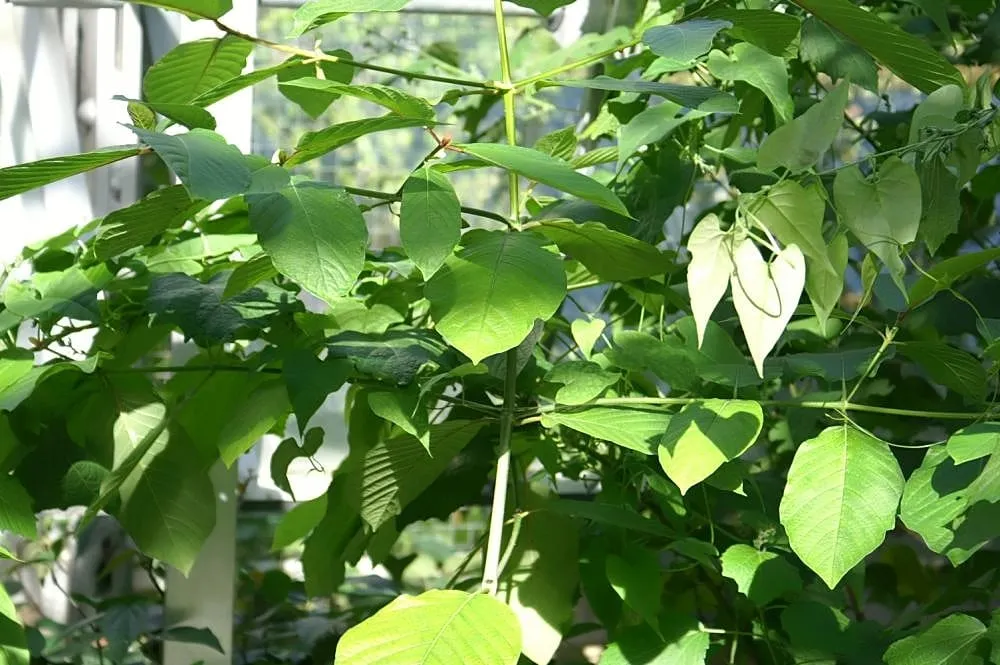

Kratom’s effects on the body do not come from a single active ingredient. They come from a family of compounds called alkaloids, of which one, mitragynine, makes up most of the total. This page sets out what the main alkaloids are, how they act on the brain, and, just as important, how much of that is settled and how much is still guesswork.
The honest headline first: most of what is known about these compounds comes from test-tube and animal studies. Controlled human pharmacology is thin. So when the science below says an alkaloid “does” something, read that as “did this in a cell assay or in rodents,” unless a human study is named. That distinction is the whole point of this section.
What an alkaloid is, and how much kratom contains
An alkaloid is a naturally occurring nitrogen-containing compound made by a plant, often active on the nervous system in small amounts. Caffeine, nicotine and morphine are all alkaloids.
Kratom leaf is a mixture of many of them. The European Union Drugs Agency (EUDA) counts more than forty structurally related alkaloids in the plant; a 2022 review in Frontiers in Pharmacology puts the number of isolated alkaloids at around fifty-four. Together they make up only a small fraction of the dried leaf: the EUDA gives a total alkaloid content of about 0.5 to 1.5 percent by weight.
Within that fraction, one compound dominates. In Thai kratom, mitragynine can account for up to about 66 percent of the total alkaloid content, according to the EUDA; in Malaysian varieties it can be lower, around 12 percent. The rest is spread across many minor alkaloids, most of them barely studied. This matters for a simple reason: kratom is not one drug, it is a variable botanical mixture, and its composition shifts with variety, plant age and harvest.
Mitragynine: the main alkaloid
Mitragynine was first isolated in 1921 and its structure worked out in the mid-1960s. It is the compound present in the largest amount, and most kratom research is really research on mitragynine.
Its best-understood action is on the mu-opioid receptor (often written MOR), the same receptor in the brain and body that morphine and other opioids act on. The key word is how it acts there. A drug that switches a receptor fully on is a full agonist (morphine is one). A drug that binds and switches it only partly on, even at saturating amounts, is a partial agonist. Detailed receptor studies by Kruegel and colleagues, published in the Journal of the American Chemical Society in 2016, found mitragynine to be a partial agonist at the human mu-opioid receptor, with a maximal effect far below that of a full opioid (the Frontiers review summarises its efficacy at roughly a third of the maximum). That its opioid effects are blocked by naloxone, the standard opioid-overdose reversal agent, confirms the receptor involved (EUDA).
Two further points from the same 2016 work are worth stating carefully, because they are often overstated elsewhere:
- The signalling is “G-protein biased.” Receptors can pass on their signal through more than one internal pathway. Mitragynine was found to favour one (the G-protein route) over another (beta-arrestin recruitment). Because the beta-arrestin route has been linked to some opioid side effects, some researchers proposed that biased compounds might carry a different risk profile. That is a hypothesis drawn from cell studies. It has not been shown to make kratom safe in humans, and the general theory behind it is itself debated in the opioid field. Treat any “safer opioid” claim built on it as unproven.
- It is not only an opioid. Mitragynine also acts at non-opioid targets. The EUDA notes involvement of serotonin (5-HT2A) and alpha-2 adrenergic receptors and neuronal calcium channels; the Frontiers review describes mitragynine acting as an antagonist (a blocker) at the 5-HT2A serotonin receptor in animal work. These non-opioid actions are the leading candidate explanation for kratom’s stimulant-like effects at low doses, though the EUDA states plainly that the mechanism behind the stimulant effect is unclear.
7-hydroxymitragynine: minor in the leaf, but potent, and partly made by your own body
7-hydroxymitragynine (usually shortened to 7-OH) is present in the leaf only in very small amounts, well under the level of mitragynine. Despite that, it matters out of proportion to its quantity, for two reasons.
First, it is far more potent at the mu-opioid receptor than mitragynine. In mice, the EUDA notes, 7-OH was a more potent painkiller than morphine, even when given by mouth.
Second, and this is the finding that reframed the whole picture: 7-OH is not only something you consume, it is something your body makes from mitragynine. A 2019 study in ACS Central Science showed that mitragynine is converted into the much more potent 7-OH in liver preparations from both mice and humans, and that 7-OH is a key mediator of mitragynine’s pain-relieving effect in mice. In other words, part of what mitragynine appears to “do” may actually be done by the 7-OH the body produces from it. This is a metabolite, a product of the body breaking a substance down. How large this effect is in living humans, as opposed to liver preparations and mice, is not yet established.
This distinction has a practical edge. Because 7-OH is so much more potent, concentrated or semi-synthetic 7-OH products are pharmacologically a different proposition from ordinary leaf, and are treated as a separate safety concern. That topic sits in its own piece; here the point is only that the leaf’s most potent opioid component is present naturally in trace amounts and is also generated inside the body.
The other alkaloids, and why “kratom” is not one molecule
After mitragynine, the next alkaloids by abundance include its close structural relatives speciogynine, speciociliatine and mitraciliatine, along with paynantheine. The first three are diastereomers of mitragynine: same atoms, assembled in a slightly different three-dimensional arrangement. Small as that difference sounds, it changes how they behave.
In the 2016 receptor study, mitragynine’s diastereomers did not act like it. Speciogynine and speciociliatine showed little or no agonist activity at the mu-opioid receptor and behaved instead as weak antagonists, meaning they tend to block the receptor rather than switch it on. Later work using different assays has not always agreed on the details, which the Frontiers review attributes partly to differences in test method. The safe summary is that these minor alkaloids are pharmacologically distinct from mitragynine, are studied far less, and in some experiments pull in the opposite direction at the same receptor.
The takeaway is that a kratom leaf delivers a mixture whose components can act on different receptors, and even oppose one another, rather than a single well-characterised drug.
What this adds up to for the body and brain
Putting the pieces together, with the evidence tier attached to each:
- The opioid-like effects (pain relief, and at higher intake sedation) are attributed mainly to mitragynine and its metabolite 7-OH acting as partial agonists at the mu-opioid receptor. Evidence: strong at the level of cell and animal studies; limited in controlled humans.
- The stimulant-like effects reported at low intake are not well explained. The EUDA links them tentatively to non-opioid targets and states the mechanism is unclear. Evidence: weak, largely from traditional use and observation.
- The overall dose pattern most often described, stimulant-like lower down and opioid-like higher up, comes largely from traditional use, user reports and animal work. Formal human pharmacology is scarce: the EUDA can point to only a handful of controlled human experiments, one of them a single 50 mg oral dose of mitragynine recorded decades ago.
What we do not know
Quite a lot, and it is worth being clear about it:
- How the whole mixture behaves in a living person. Nearly all the receptor data describe single purified alkaloids, not leaf.
- How much of mitragynine’s effect is mitragynine itself and how much is the 7-OH the body makes from it, in humans rather than in liver preparations.
- What the minor alkaloids contribute, if anything, at the amounts actually present.
- Whether the “G-protein biased” signalling seen in cells translates into any real safety difference in people. On current evidence it should not be assumed to.
None of this is a verdict for or against kratom. It is a map of where the pharmacology is solid and where it runs out. On the questions readers most often ask next, about benefit, dependence and harm, the honest starting point is that the chemistry above sets the stage but does not settle them.