
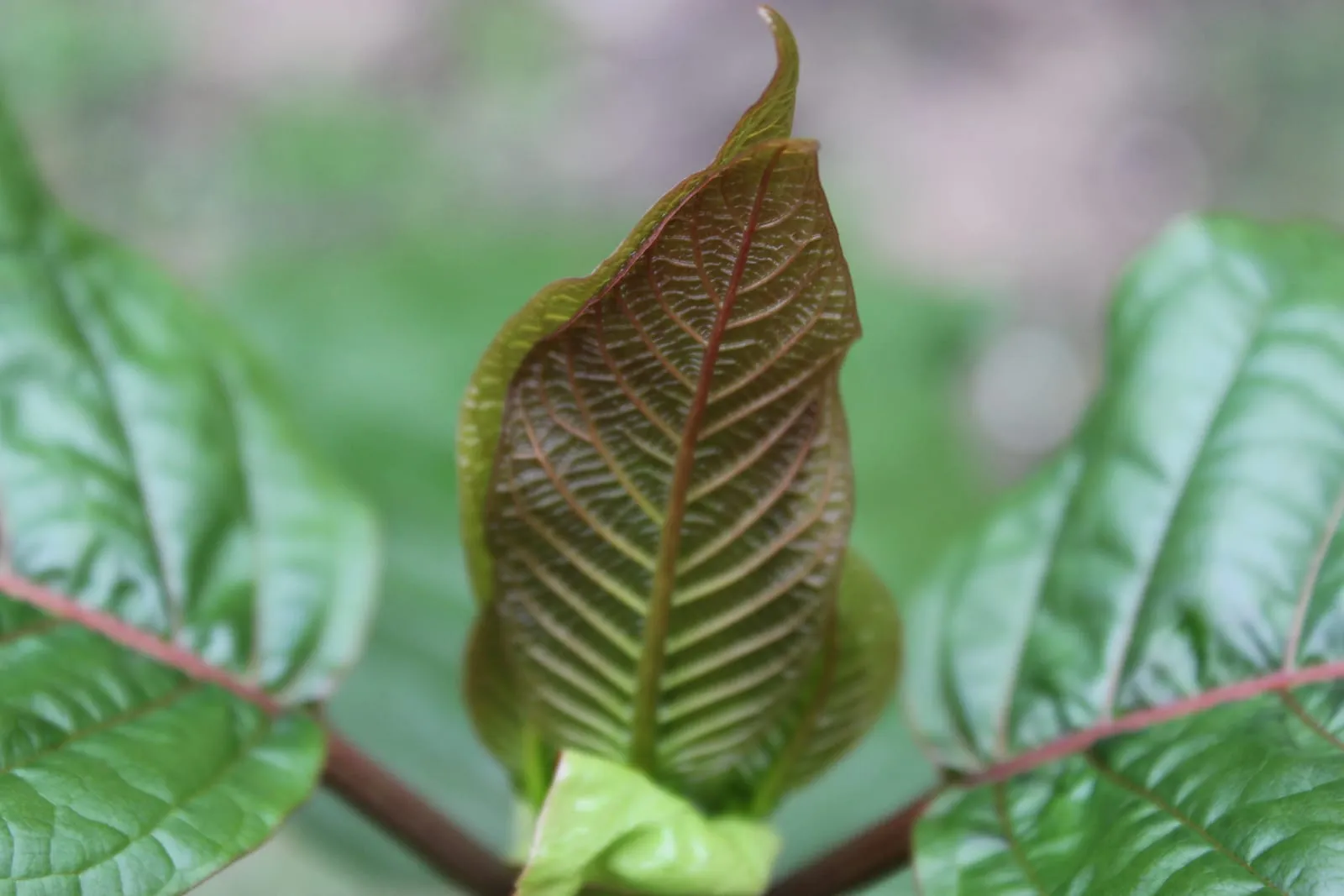

That stopping regular kratom use can bring on a withdrawal syndrome is one of the better-supported claims about the plant. Not because any single study proves it, but because several weak lines of evidence, from human surveys, animal experiments and clinical case reports, point the same way. What is missing is any strong evidence: there is not one controlled human trial of kratom withdrawal, or of how to treat it. This page reports what the studies show, and, just as important, how far they can be trusted.
Two definitions first. Dependence means the body has adapted to a substance, so that stopping it produces physical or psychological symptoms; it is not the same as addiction, the compulsive use of something despite harm. Withdrawal is the set of symptoms that dependence produces on stopping. Most of the evidence below is about dependence and withdrawal, not about how addictive kratom is.
How this review was put together
Being open about the method is part of the point, because it is what separates a review from an opinion.
- The search was run on Europe PMC (a European database of biomedical literature) in July 2026, for kratom AND withdrawal, which returned about 737 records, together with a separate search for kratom systematic reviews.
- From those, this review prioritises the strongest available designs: two existing systematic reviews (Stanciu and colleagues, 2022, on kratom and opioids; Wright and colleagues, 2021, on newborns), the two largest human surveys (Singh and colleagues, 2014, 293 regular users in Malaysia; Garcia-Romeu and colleagues, 2020, 2,798 online respondents in the United States), and the animal evidence those reviews summarise, cross-checked against the European Union Drugs Agency (EUDA) profile.
- Reading depth, stated plainly, because it is uneven. The EUDA profile and two of the studies (Garcia-Romeu and colleagues, 2020, and Wright and colleagues, 2021) were open access and were read in full. Two others (Singh and colleagues, 2014, and the Stanciu systematic review, 2022) sit behind journal paywalls and were read only at the level of their published abstracts. Claims drawn from those two are limited to what their abstracts state, and are flagged where they appear.
- No randomised controlled trial, the design that could actually measure how severe kratom withdrawal is or how to treat it, was found. That absence is itself a finding.
What the human surveys show (tier: cross-sectional self-report)
A cross-sectional survey is a one-time questionnaire. It can show how common something is and what people report experiencing. It cannot prove cause, and it cannot measure a symptom objectively; it records what respondents say.
The largest survey from a traditional-use population is Singh and colleagues (2014), who questioned 293 regular kratom users in northern Malaysia. More than half met the study’s threshold for severe dependence and another 45 percent for moderate dependence. The physical withdrawal symptoms respondents reported included muscle spasms and pain, difficulty sleeping, watery eyes and nose, hot flashes, fever, reduced appetite and diarrhoea; the psychological ones included restlessness, tension, anger, sadness and nervousness. Heavier daily use went with worse dependence and withdrawal. Three things to hold in mind: this paper sits behind a paywall and is reported here from its abstract, everything in it is self-reported, and it measured withdrawal with a checklist originally designed for cannabis rather than opioids.
From a Western population, Garcia-Romeu and colleagues (2020) surveyed 2,798 mostly United States kratom users online, and measured withdrawal with a validated instrument, the Subjective Opiate Withdrawal Scale. Daily use was common, and about 41 percent said they used kratom to cut down on opioids. The harm figures were modest: around a third reported an adverse effect, definite or possible, almost all rated mild and lasting under a day, and fewer than one percent found any effect severe enough to seek medical care. Withdrawal symptoms were reported by roughly one in ten respondents, and among those, the average severity score fell in the scale’s “mild” band. Fewer than three percent met the formal diagnostic criteria for a moderate or severe kratom use disorder. The authors are direct about the catch: respondents were recruited through pro-kratom websites, so the sample skews toward committed, favourably disposed users, and in their own words adverse effects may be underestimated and benefits overestimated.
The consistent thread across surveys is that regular users commonly report dependence and an opioid-like withdrawal, usually described as milder and shorter than withdrawal from classical opioids. The EUDA profile reaches the same general picture, calling the human withdrawal “relatively mild” and typically easing within a week.
One caution attaches to all of this. The Stanciu systematic review (2022), read here at abstract level, notes that several user surveys were carried out with assistance from pro-kratom lobbying organisations, and that these tend to report high benefit and minimal harm. Self-reported survey data should be read with that interest in mind.
What the animal studies show (tier: rodent, preclinical)
Preclinical means laboratory and animal work done before human trials. It can show a biological mechanism, but not how a drug behaves in people.
Here the evidence is fairly consistent. The Stanciu review reports that rodent models support the kratom alkaloids acting on opioid receptors, and that in animals the alkaloids can reduce opioid withdrawal. Mitragynine, the main alkaloid, appears less reinforcing than morphine, while 7-hydroxymitragynine, its more potent relative, can substitute for morphine and carries potential for tolerance and dependence. The EUDA profile adds that mice given 7-hydroxymitragynine repeatedly developed tolerance, cross-tolerance to morphine, and a withdrawal that could be triggered by naloxone (the standard opioid-blocking drug used to reverse overdoses). A withdrawal that naloxone can precipitate is a hallmark of genuine physical opioid dependence.
So the animal work supports a real dependence mechanism. It cannot tell us how severe or how common withdrawal is in humans.
The severe end, and newborns (tier: case reports)
A case report describes a single patient. It shows what can happen, not how often, and it tends to record the dramatic rather than the typical.
The Stanciu review counted 25 case reports in its search, describing a range of toxicities. Alongside the “generally mild” survey picture, some case reports, more often from Western users and sometimes involving other drugs or concentrated products, describe more severe withdrawal that needed medical treatment.
Newborns are a documented and serious instance. Wright and colleagues (2021) searched the literature on kratom use in pregnancy and found five published case reports, describing six mothers. In each, both the mother and the infant showed withdrawal, and both were treated; the infants were treated for a neonatal withdrawal that clinicians managed with morphine. Two things temper it. Several of the mothers also used other substances, which blurs how much to attribute to kratom, and case reports show that something can happen, not how often it does. Neonatal withdrawal from kratom is real, but the evidence for it is a handful of case reports, not systematic study.
Treatment
There are no controlled trials showing how best to manage kratom withdrawal. In the reported cases that were severe, clinicians generally used the standard approaches for opioid withdrawal. That is background, not guidance: managing withdrawal is a medical decision and belongs with a clinician, not a website.
The honest verdict
Two things can be said with reasonable confidence, and much cannot.
Reasonably supported: a withdrawal syndrome exists after regular kratom use. Three independent and individually weak lines of evidence, human surveys, animal models and case reports, agree on it, which is the kind of convergence that makes a low-tier conclusion trustworthy.
Not established: how severe it usually is, how common, how long it lasts, and how best to treat it. The human data are self-reported snapshots, some from interested sources; the mechanism data are from rodents; the severe cases are anecdotes; and there is not a single controlled human trial.
That places the truth between the two loud claims. “Kratom is not addictive” is not supported; the surveys and the animal work both point to dependence. “Kratom withdrawal is as bad as heroin” is not supported either; most reports describe something milder and shorter, with a severe tail. The defensible statement sits in the middle, and it carries wide error bars.
We will revise this page as better evidence appears, and a controlled human study would change it a great deal. If you can point us to one we have missed, write to editorial@wikikratom.com.